

AI Fundraising Tools for Startups: Where AI Stops in a Raise
Investor research, outreach drafts, decks and data rooms: what AI fundraising tools for startups do in a raise, where they stop and what takes over.

Investor databases, chat assistants and deck generators take the volume work of a raise: lists, first emails, first-draft slides and document tracking.
A list of past rounds cannot show which fund can allocate this quarter; fund closes, partner moves and exits decide that.
Under the SEC's Rule 506(b) a private placement allows no general solicitation, so a mass AI send is a choice of exemption.
An AI pitch deck generator drafts the standard slide order; team, traction and use of proceeds come from the company's own numbers.
spectup's in-house signal engine times every investor approach, and investor data from closed transactions checks it before it goes out.
AI fundraising tools for startups take hours out of the parts of a raise that investors weigh least, such as building lists, drafting emails and tracking who opened what. They draft the deck but not the numbers in it, and they don't decide who leads the round, when a fund has capital to put to work, or how the first call goes.
Four of the seven jobs below can go to software, at least as a first draft. The other three decide the round.
| Item | Share of work AI can do (0 to 100) | Weight in the decision (0 to 100) | Note |
|---|---|---|---|
| Investor research | 82 | 30 | |
| Email drafts | 76 | 18 | |
| First-draft deck | 70 | 56 | |
| Document tracking | 64 | 10 | |
| Target list for this round | 42 | 64 | |
| Timing the approach | 28 | 76 | |
| First call and terms | 8 | 84 |
What AI fundraising tools do in a raise
Two kinds of software sell as AI for fundraising. Predictive tools find and score names: who has invested in companies like yours, at which stage, how recently. Generative tools write the first email, the deck outline and the answer to a diligence question.
Five jobs in a raise have a tool behind them, the four from the figure above plus the pipeline. The table shows where each tool stops and a person takes over.
4 columns. Drag the table sideways; the first column stays put.
Job | What AI does well | Where it stops | Example |
|---|---|---|---|
Investor research | Pulls funds by sector, stage and past rounds in minutes | Can't see whether a partner has room in the current fund this quarter | Crunchbase, Signal by NFX |
Drafting outreach | A first email per investor in seconds, plus the follow-ups | Can't supply the reason to write this week, or the person who introduces you | A chat assistant, Foundersuite's email drafts |
First-draft deck | Slide order and layout from a prompt | Can't write the team, traction and use-of-proceeds slides from facts it doesn't hold | Pitch, Beautiful.ai |
Document tracking | Logs who opened which page and for how long | Shows time on a page; the reason behind it takes a call | Papermark |
Pipeline | Records every contact, stage and next step | Can't judge which conversation leads to a lead investor | Foundersuite |
Outside the deck, every limit in that table comes down to three facts about one investor this quarter: room in the current fund, a reason to write now and a person who can introduce you. Those facts come from calls, introductions and the funds' own filings.
Finding them, investor by investor, is what a capital introduction service is hired for.
Which AI tools for startup fundraising find the right investors?
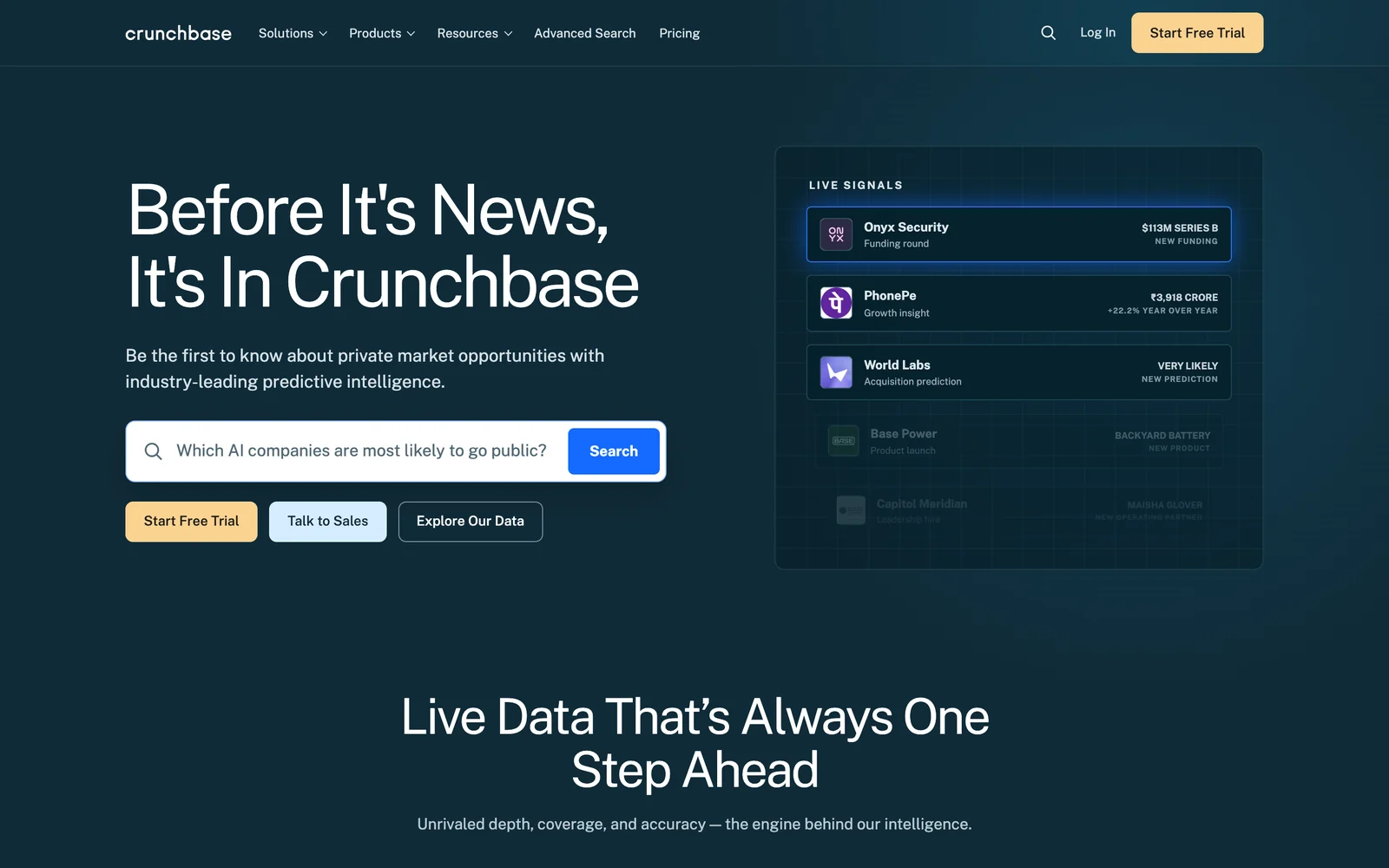
Crunchbase sells predictive intelligence on private markets, and AI matching platforms put a score on each investor in records like these.
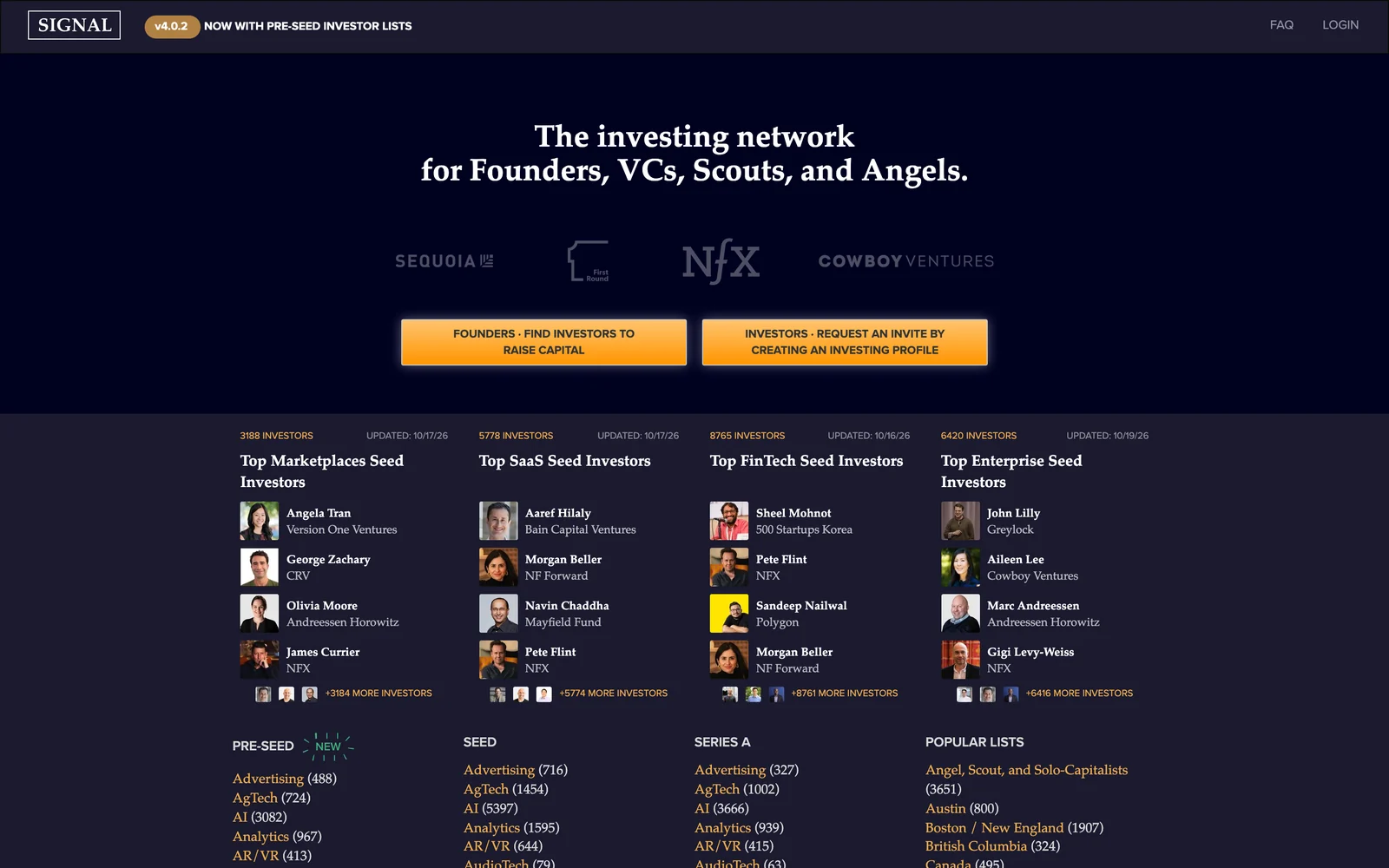
Signal by NFX does the same job and makes no AI claim. It's an investing network that ranks investors by sector and stage, partly on upvotes, from data its community enters.
A round turns on two things a record of past rounds can't show: which of those investors can allocate this quarter, and who can put you in front of the partner who decides.
Capital becomes allocatable on events a list of past cheques doesn't hold:
a fund closes and starts deploying
a fund publishes a mandate for your sector
a partner moves firm and arrives with a fresh mandate
an exit at a portfolio company frees capital
The first of these leaves a public record. A US fund selling under Rule 506 files a Form D notice on the SEC's EDGAR system within 15 days of its first investor committing, so a long list can be checked there by name.
The filing stays public, and the SEC asks for an amendment each year the offering runs past 12 months or when certain information changes, so a recent amendment is a sign that a fund's offering is still open.
Before any email goes out, two filters do most of the cutting, the investor's usual cheque size against your round and whether the fund it would come from is still making new investments.
Can AI write investor outreach that gets a reply?
Drafting is where AI fundraising tools are strongest. A general-purpose chat assistant writes a first note per investor in seconds, and sequencing software can send it to hundreds of names.
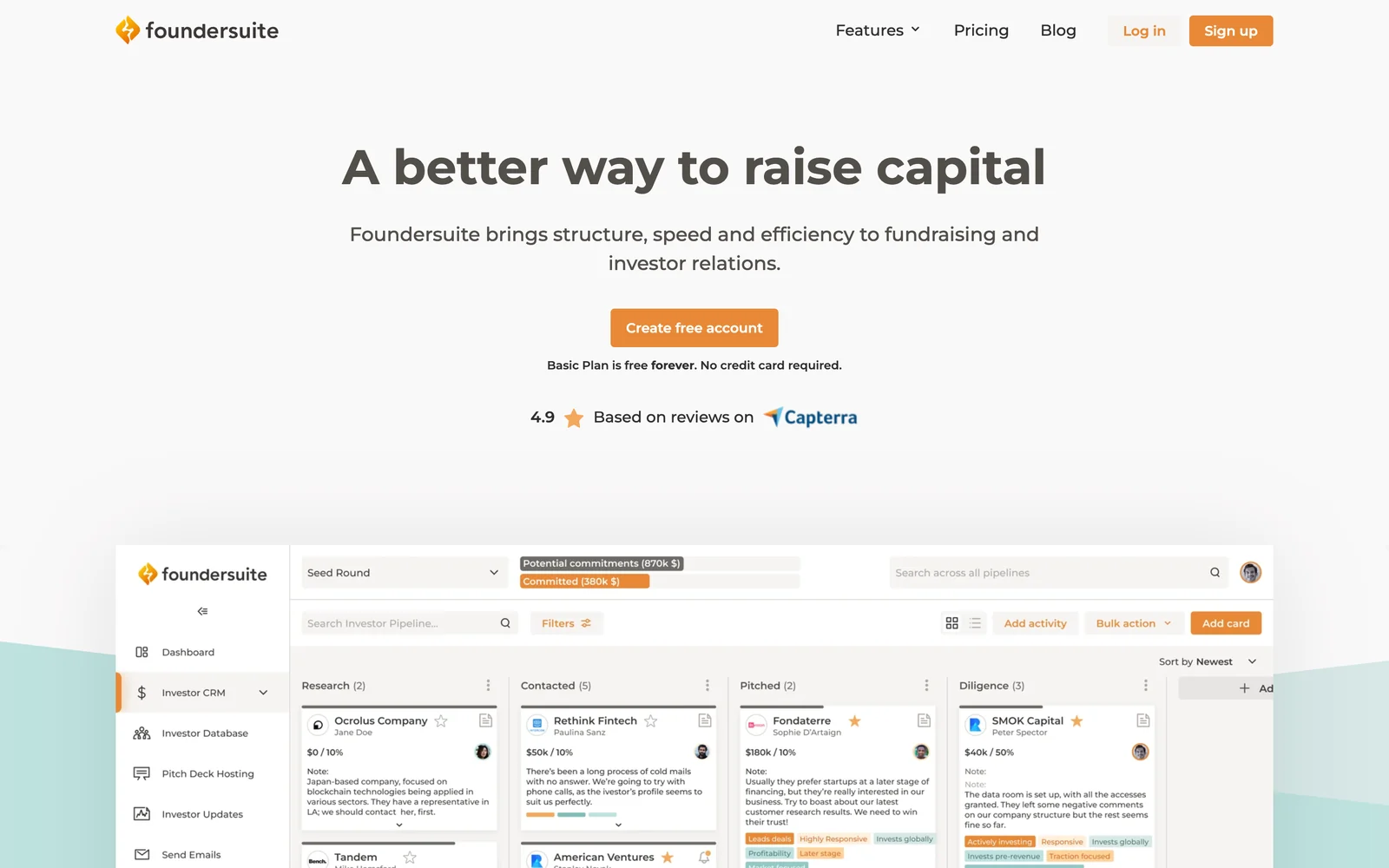
Foundersuite puts the drafting inside an investor CRM: on its Gold and Platinum plans, AI Email Generation drafts investor outreach for you to edit before sending.
Whether anyone answers depends on what the investor's inbox already holds. One investor told TechCrunch in March 2025 that AI-written pitches arrive by the dozen, with the same structure and different words:
“It’s so much that it’s drowning out all the genuine outreach.”
One investorspeaking to TechCrunch, March 2025
She added that there are "always some weird inaccuracies" in them. A general partner in the same piece put his own inbound at about 30 pitches a day, each answered by a standing out-of-office reply that points founders to the fund's website.
The same investor expects to filter out email from unknown senders, so that meeting someone new would take a warm introduction or an in-person meeting.
The test for AI investor outreach is whether each email names something only this investor would recognise: a portfolio company, a recent close, a thesis the partner has published.
The write-up on warm introductions to investors covers who can make that introduction and how to ask.
What the rules say about AI-sent investor outreach
Sending a raise to thousands of unknown names is a legal choice in the US, made before the first email goes out. Under Rule 506(b), the exemption that carries most of the money raised in US private placements, an offering allows "no general solicitation or advertising to market the securities".
The same page notes that the more purchasers there are, and the more remote their relationship to the company, the harder it is to show a private placement qualifies. It also warns that an offer to even one person who doesn't meet the conditions may put the entire offering in violation of the Securities Act, and a cold AI sequence to strangers runs that risk with every name it reaches.
Size is no reason to leave 506(b): it caps neither the amount raised nor the number of accredited investors.
A second exemption, Rule 506(c), allows general solicitation provided every purchaser is accredited, the issuer takes reasonable steps to verify that status, and the other conditions of Regulation D are met. The verification is work the company carries for each purchaser. Form D applies under both exemptions.
From July 2023 to June 2024, companies raised $170 billion under 506(b), $12 billion under 506(c) and $1.5 billion under Regulation A, figures SEC Commissioner Hester Peirce cited in remarks of 6 May 2025.
3 columns. Drag the table sideways; the first column stays put.
Rule | What it says | What it means for AI-sent outreach |
|---|---|---|
SEC Rule 506(b) | No general solicitation or advertising | Approach investors you know, or reach through someone who does |
SEC Rule 506(c) | General solicitation allowed; every purchaser accredited, with reasonable steps to verify | A broad campaign is possible, with verification work for each purchaser |
Europe adds a disclosure rule. Under the AI Act, people "should be made aware that they are interacting with a machine", and its transparency rules have applied since August 2026, according to the European Commission. An AI agent that answers investors on a company's behalf has to say what it is.
None of this is legal advice, and the company's counsel decides which exemption a round uses. spectup's U.S.-related activities are conducted under SEC Rule 15a-6 through a chaperoning arrangement with a U.S. registered broker-dealer that is a FINRA and SIPC member.
I'd settle the exemption with counsel before buying any tool that sends email. In a US private placement, mass sending only pays off under 506(c).
Which slides can an AI pitch deck generator draft?
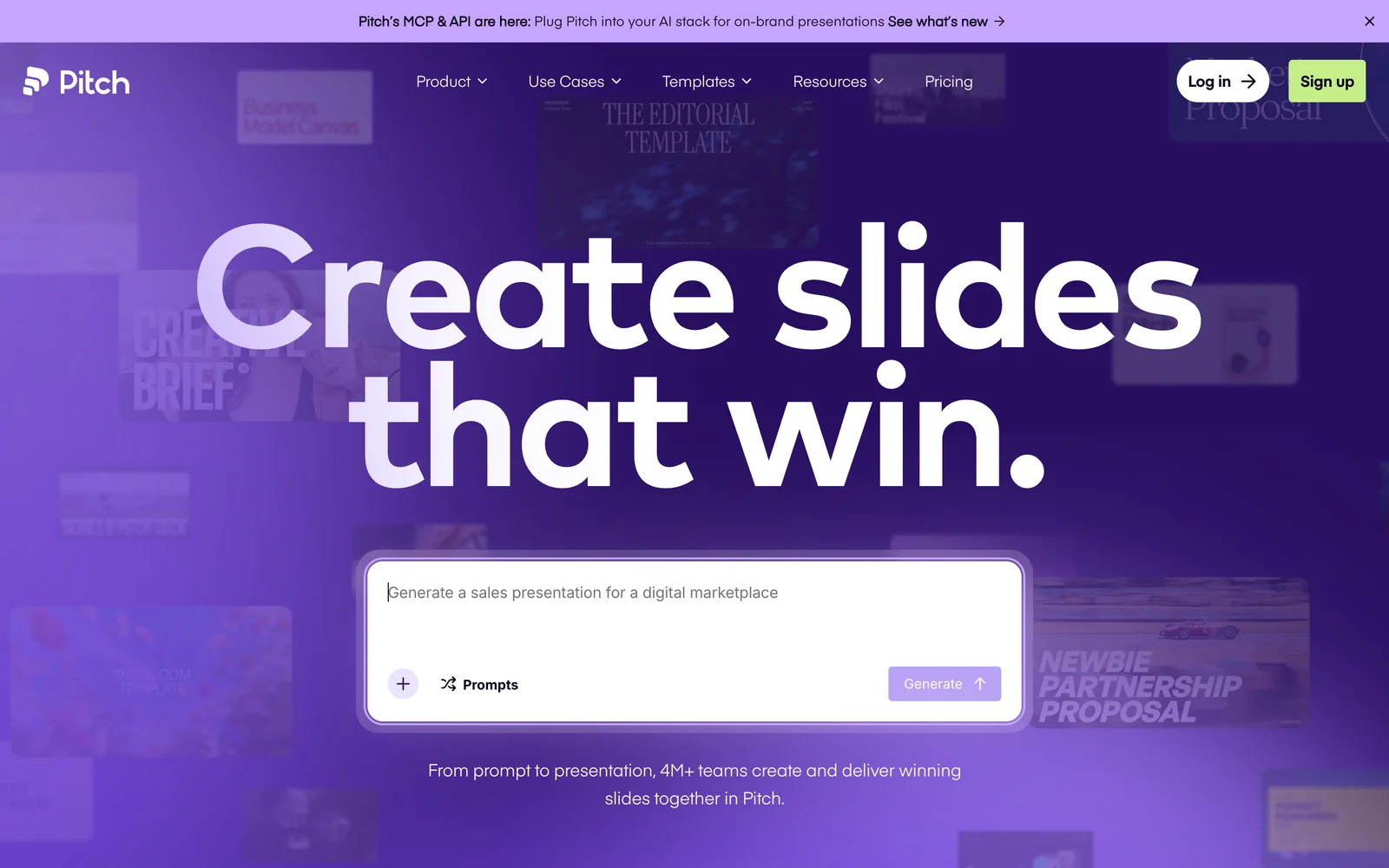
All of them, in the order investors expect, as a first draft from a prompt in minutes. Pitch describes itself as an AI presentation workspace that goes from prompt to presentation.
That order runs problem, solution, market, product, traction, team, the ask.
The slides that carry a round are the ones only the company can write: the team, the traction and the use of proceeds, each built from facts the generator doesn't hold. Keep the draft's structure and layout, then write those three from your own data room, and treat any figure the generator put in as a placeholder until it's replaced from the company's own model.
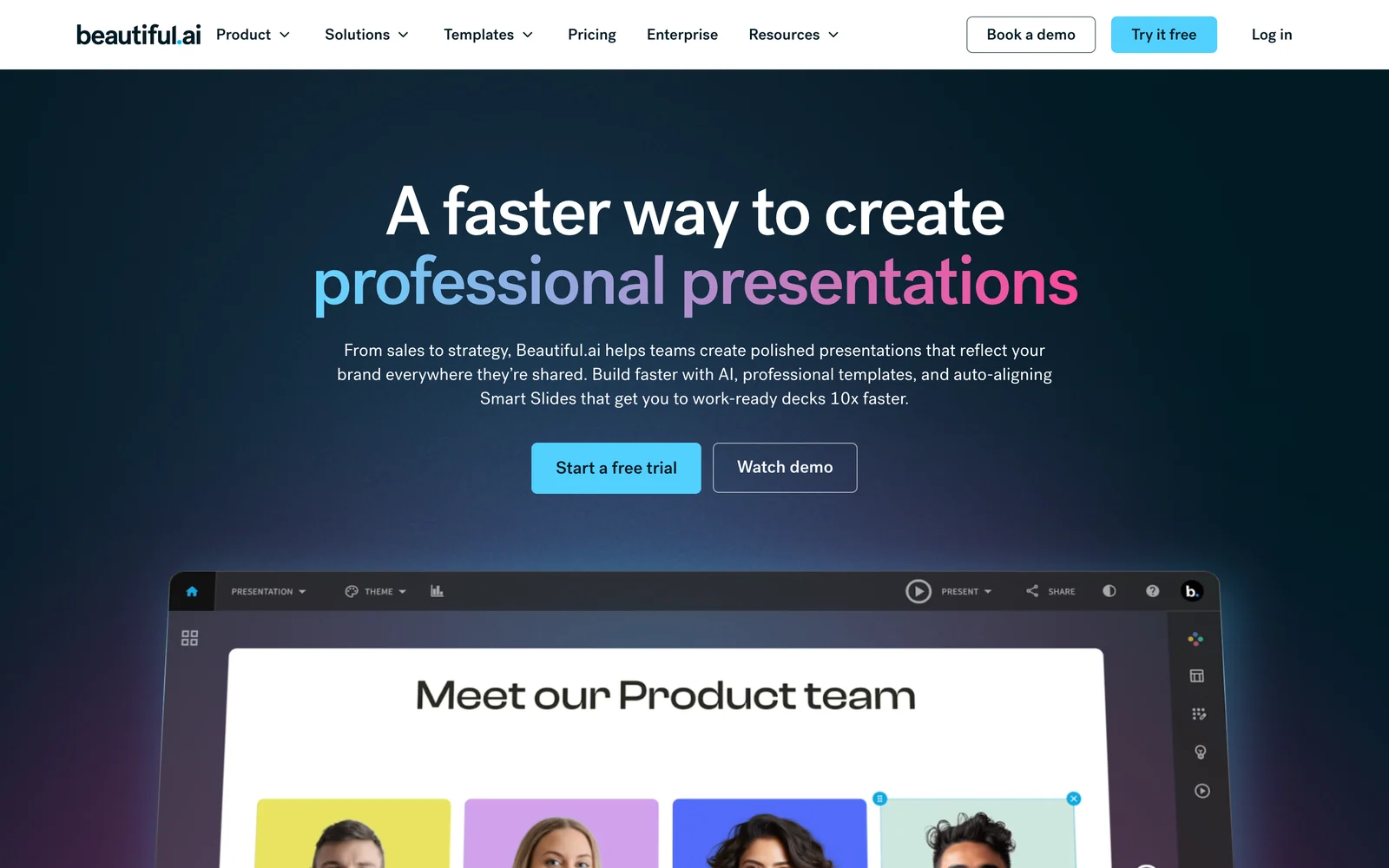
Beautiful.ai is general presentation software that ships pitch deck templates. Unlimited AI content generation and an AI writing assistant come with its Pro plan, $14.50 a month for one person, billed annually; the 14-day trial asks for a credit card.
When the equity story still has to be written, a pitch deck service builds it from the company's numbers.
Data rooms and investor CRMs: tracking who reads what
Document tools record who opened the deck, which pages they read and for how long. Papermark, for one, shows the time spent on each page of shared documents and data rooms.
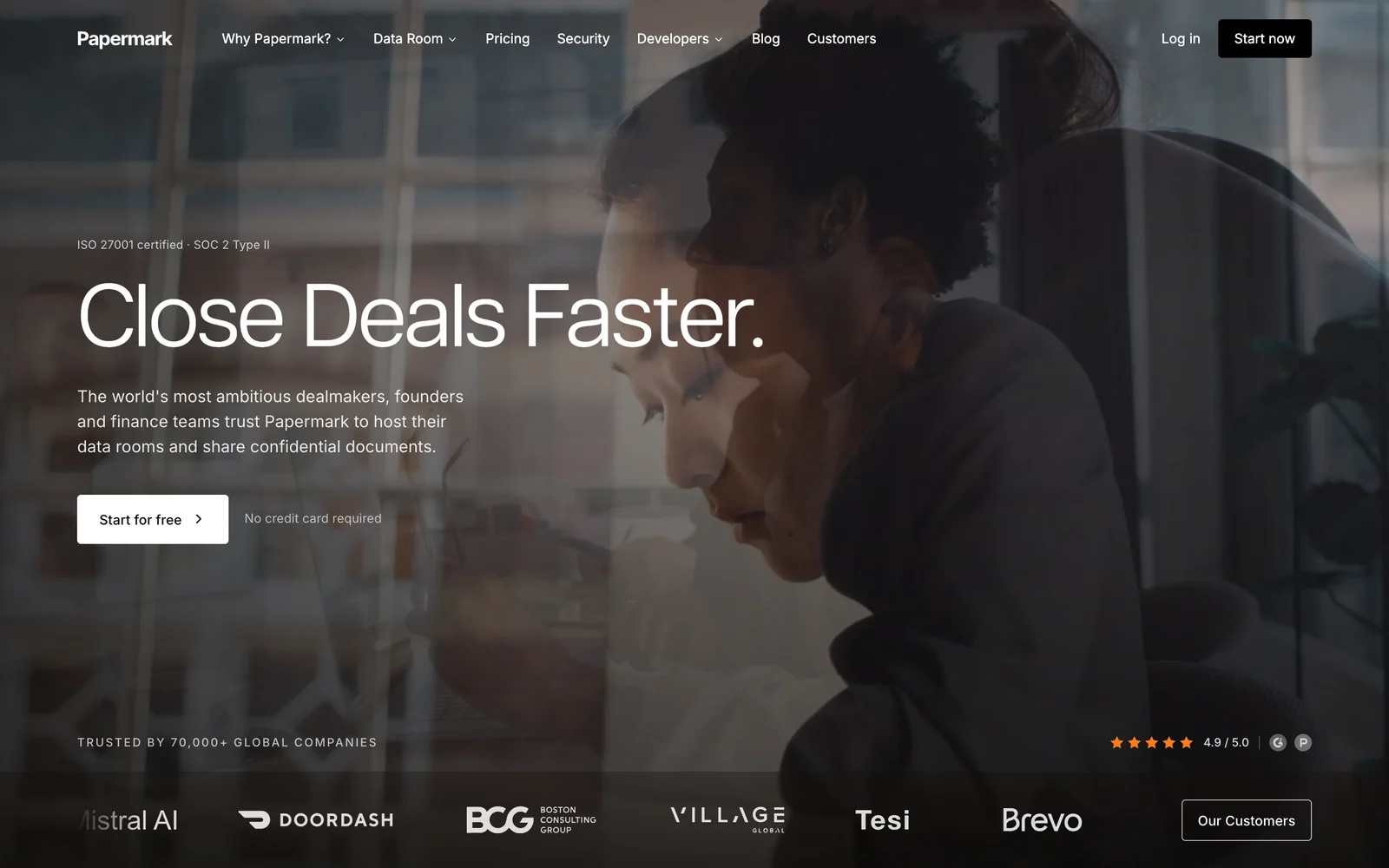
Read that log as a prompt for a call. A partner who reads the financials twice in a week without replying is giving you a reason to ring, and only the call tells you whether it's diligence or curiosity.
Settle what a virtual data room holds before the round opens, and send it after the first call. Sent with the first email, it's read by people who haven't yet decided to look. Set access by stage: the deck and a summary for a first look, the model and the contracts after a call.
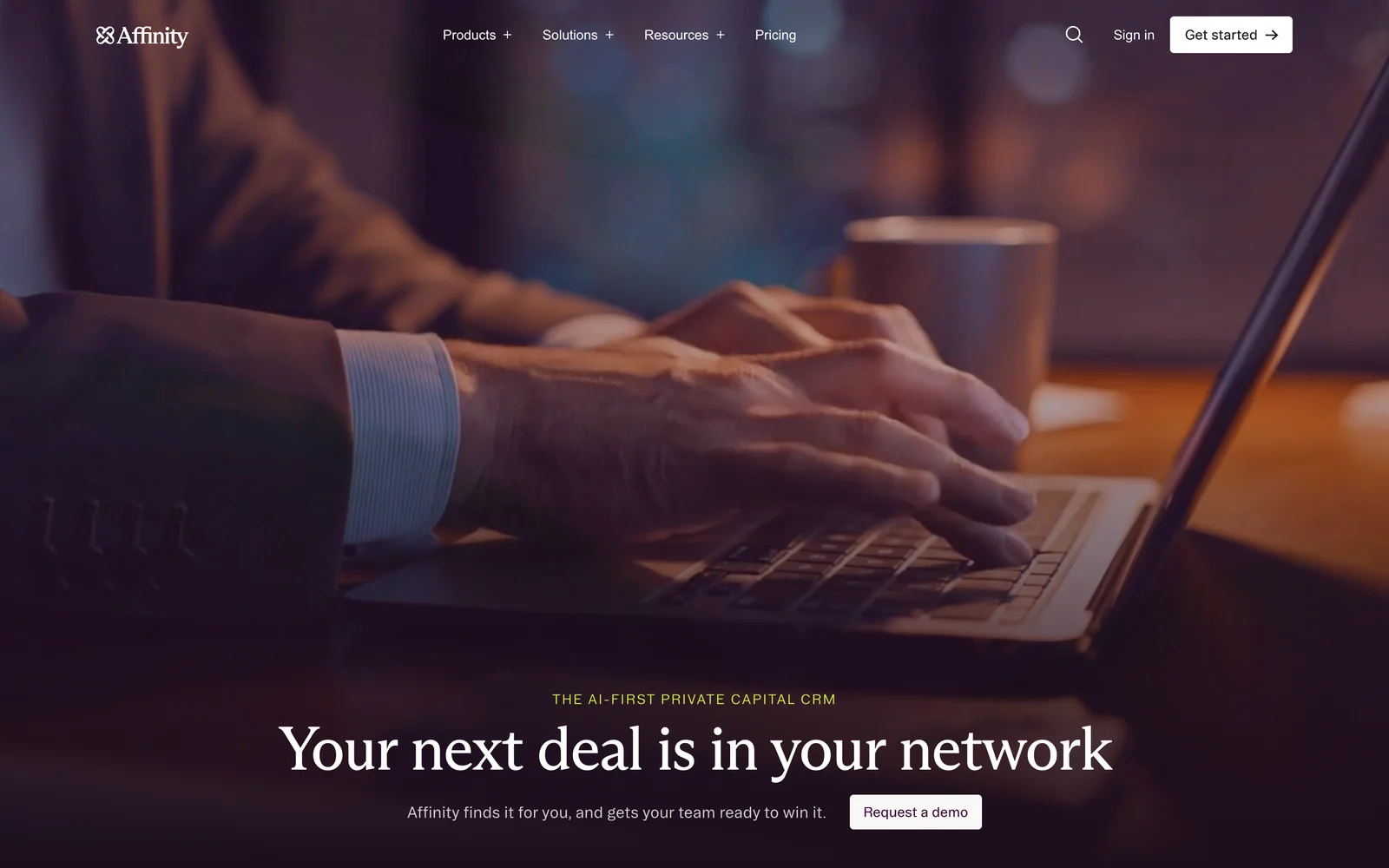
Investors run AI too. Affinity presents itself as the AI-first CRM for private capital, built for PE and VC firms to source deals and manage relationships.
In Bain's 2025 survey of 307 M&A practitioners, 21% were using generative AI for M&A, up from 16% in 2023, and over 50% expected to build it into their dealmaking by 2027. In the same report, more than 60% of the private equity firms Bain interviewed used at least one generative AI tool for sourcing, screening or diligence.
| Series | Year | Value |
|---|---|---|
| Using it | 2023 | 16% |
| Using it | 2025 | 21% |
Software on the fund's side may read the deck and the data room before a partner does, so every figure in them has to match the model they came from.
Where AI fundraising tools stop in a raise
No tool picks the lead, and a round can stall on that alone.
A US public-safety software company we represent had a good first call with a European VC. The fund's answer: it co-invests alongside a lead, so it would wait for a lead investor's term sheet before booking a partner call.
A database would have listed that VC as a fit, and it was one. The lead also sets the price and the structure the others join on, so the outreach finds the lead first.
How spectup runs investor outreach on a signal engine and transaction data
spectup works for the company that raises, and only that company pays us. On an investor outreach engagement, the targeting and the timing run on a signal engine we built in-house and on investor data from our own closed transactions.
The signal engine flags the week capital frees up at a fund on the list: a close, a new mandate, a partner arriving from another firm or an exit. Investor data from closed transactions shows what each name has written cheques into.
No approach goes out until a signal has timed it and the investor data has confirmed the fit. The list is built for this raise, and the company approves it before anyone is approached.
| Step | Leads to |
|---|---|
| Signal engine (A fund closes, a partner moves) | Investor data check |
| Investor data check (What each name has backed) | Company approves the list |
| Company approves the list (Before anyone is approached) | The approach |
| The approach (Sequenced across channels) | spectup takes the first call; Straight to the company's calendar |
| spectup takes the first call (Qualifies, NDA, data room) | Pipeline |
| Straight to the company's calendar (Company briefed first) | Pipeline |
| Pipeline (Every note and objection logged) | end |
The names come from our direct relationships, the investors and LPs we have sat in front of with clients, and our partner firms. Every meeting is briefed before the call.
Run this way, the outreach generated 74 investor meetings on one mandate.
We charge a retainer plus a success fee that the engagement sets and that is paid once the money raised has arrived. The order the campaign itself runs in, from list to follow-up, is set out in how to sequence an investor outreach campaign.
“Forty investor calls through their service, with real interest from multiple parties.”
Richard AbbottCo-Founder, AAV, Defence technology, unmanned systems
40investor meetings booked for themIn-Q-TelMarlin Equity PartnersCapital FactoryPlug and PlaySonyMetaPropEnerTech CapitalMorpheus Ventures
AI tools for fundraising, a service or both: choosing for your round
Settle the round itself first. Size it and write the use of proceeds, following the seven steps in how to raise venture capital, then decide who runs the investor list. That choice turns on two facts: whether a lead is in sight, and how many kinds of investor you need to reach.
3 columns. Drag the table sideways; the first column stays put.
Situation | Tools alone | Tools plus an outreach engagement |
|---|---|---|
A lead in sight, warm paths to the partners | Usually enough: a database, a chat assistant for drafts, an AI pitch deck generator for the first slides, a tracked data room | Rarely needed |
Revenue and a plan for the money, no lead yet | The list and the drafts; timing and introductions stay with people | Targeting and timing go to the engagement, and the first calls too if the company chooses; drafting stays with the tools |
Several investor types or regions at once | A list per region, a draft per investor type | One pipeline across all of them, each approach timed per investor |
Which tool to buy first depends on which row is yours:
a tracked data room when a lead is in sight and diligence is next
a database for the long list when no lead is
a CRM with a deal pipeline when several investor types run at once
Before revenue, or with a lead and warm paths already in place, AI fundraising tools and the company's own network can carry the raise.
Three conclusions
AI saves hours on lists, drafts and document tracking, the parts of a raise an investor weighs least. Who leads, when a fund can allocate and how the first call goes are in no tool's output.
A database gives every company the same long list. The advantage is in cutting it to the investors who can allocate this quarter and reaching them through someone they trust.
In a US Rule 506(b) placement there is no general solicitation, so the volume an AI sequencer offers pays off only in a 506(c) placement. Counsel decides that first.
AI capital raising tools: questions readers ask
5 questions on investor targeting and relationships, answered by Edwin Mik, Partner & Head of IR.
01Can AI tools help startup founders prepare for fundraising?
Yes, with the volume work: the long list of investors, first emails and follow-ups, a first-draft deck and tracking who reads what. The tools don't pick the lead or time the approach, and an investor reads an untouched AI draft as one of dozens.
02What is the 80/20 rule in fundraising?
It's the observation that most of the money in a raise comes from a small share of the backers. In a priced round that usually means the lead and a few others, so the investor list is built around finding the lead.
03How should a startup raise capital?
Prepare the round before you build the list. Size the round, write the use of proceeds and build the deck and data room from the company's own numbers. Then aim the outreach at investors who can allocate now, because a fund closed, a partner moved or an exit freed capital. Reach them through warm introductions where you can, since cold email now competes with a flood of AI-written pitches.
04Are AI fundraising tools useful for non-technical founders?
Yes. Most run from a search box, a prompt or a template. The skill they ask for is checking the output against what an investor will verify.
05When should a company hire a capital introduction service instead of relying on AI tools?
When it has revenue and a clear use for the money, and either has no lead investor in sight or needs several investor types or regions at once. A capital introduction service takes the targeting and the timing, and the first calls if the company chooses; the tools keep the drafting. spectup is paid a retainer and, once the round has closed and the money has arrived, a success fee on the capital raised.

Edwin Mik
Partner & Head of IR
Formerly at Barclays, Apax Partners and Euronext, Edwin knows how investors screen a raise. He works out who is allocating now, which of the 440+ relationships is the right first call, and what they need to see.
LinkedIn


