

Fund of Funds Venture Capital: How a GP Gets Into a VC Fund of Funds
Fund of funds venture capital for GPs and LPs: how a GP approaches a VC fund of funds, the programmes that publish a route, who can invest and the fees.

An LP pays the fund of funds' own fee and expenses and, indirectly, the fees of each underlying fund.
EIF, KfW Capital and Hamilton Lane each publish how they invest in venture funds, with the figures on their own pages.
Section 3(c)(1), section 3(c)(7), the accredited investor and qualified purchaser tests and the ERISA 25% test decide who may hold an interest.
A 2017 NBER study found venture funds of funds on a par with direct fund investing after fees, and buyout ones behind.
ILPA's due diligence questionnaire, an open data room and a look-through opinion go to each fund of funds together.
Fund of funds venture capital is a pool of LP money committed mainly to other venture funds. Its LPs reach several managers through one commitment and pay fees at two levels, the fund of funds' own and each underlying fund's, as the SEC's investor education site describes.
A GP meets a fund of funds as one LP group among several, and a private placement agent builds the GP's target list with these funds of funds on it. An LP weighs a venture capital fund of funds against committing to funds directly.
Through Q3 2026, firms raising a fourth fund or later took 88.2% of US venture fundraising dollars and first-time funds about 4.5%, according to the NVCA and PitchBook Venture Monitor. Several funds of funds run programmes for newer managers, and the European Investment Fund, KfW Capital and Hamilton Lane publish how they invest, which makes theirs the first pages a newer GP reads.
What is a fund of funds in venture capital, and how does it work?
A venture fund of funds is one vehicle with its own fee, carry and expenses. The SEC's investor education site calls a fund that mainly invests in other funds a fund of funds, and the funds it commits to are limited partnerships of the kind covered in venture capital fund structures.
LPs commit once, to the fund of funds.
It commits that money to venture funds as they raise, to existing LP stakes bought on the private equity secondary market, and sometimes to one company beside a GP.
It calls capital from its LPs as the underlying funds call capital from it.
Distributions pass through two waterfalls, the underlying fund's first and then the fund of funds' own.
Figure 2 shows where each of the two fee layers sits.
| Step | Leads to |
|---|---|
| LPs (Pensions, family offices, wealth platforms) | Fund of funds [commit] |
| Fund of funds (Its own fee, carry and expenses) | Primary commitments; Secondaries; Co-investments |
| Primary commitments (New funds as they raise) | Underlying funds |
| Secondaries (Existing LP stakes) | Underlying funds |
| Co-investments (One company, beside a GP) | end |
| Underlying funds (Their own fee and carry) | end |
Fund of funds venture capital programmes a GP can approach
Three bodies publish how they invest in venture funds. EIF and KfW Capital run public programmes and Hamilton Lane is a private manager. The table covers all three, from each body's own pages as read on 9 Nov 2026.
3 columns. Drag the table sideways; the first column stays put.
Programme | Type | What its own pages say |
|---|---|---|
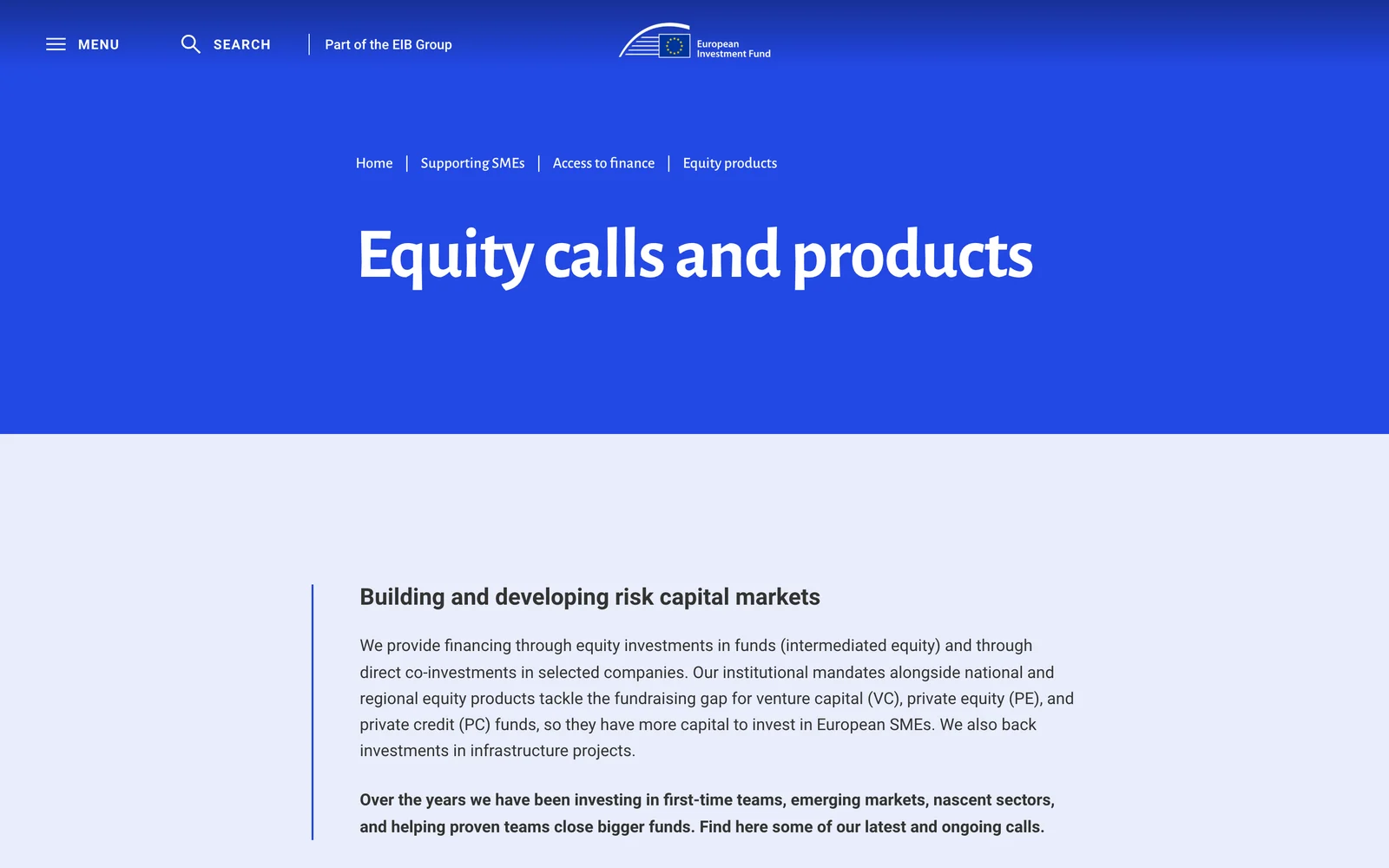
European Investment Fund | EU body, part of the EIB Group | Invests in funds and in direct co-investments; has invested in first-time teams and in proven teams closing bigger funds |
KfW Capital | Venture capital investor of the German development bank KfW | Has invested around EUR 2.9 billion in 153 venture capital funds up to the end of 2025 |
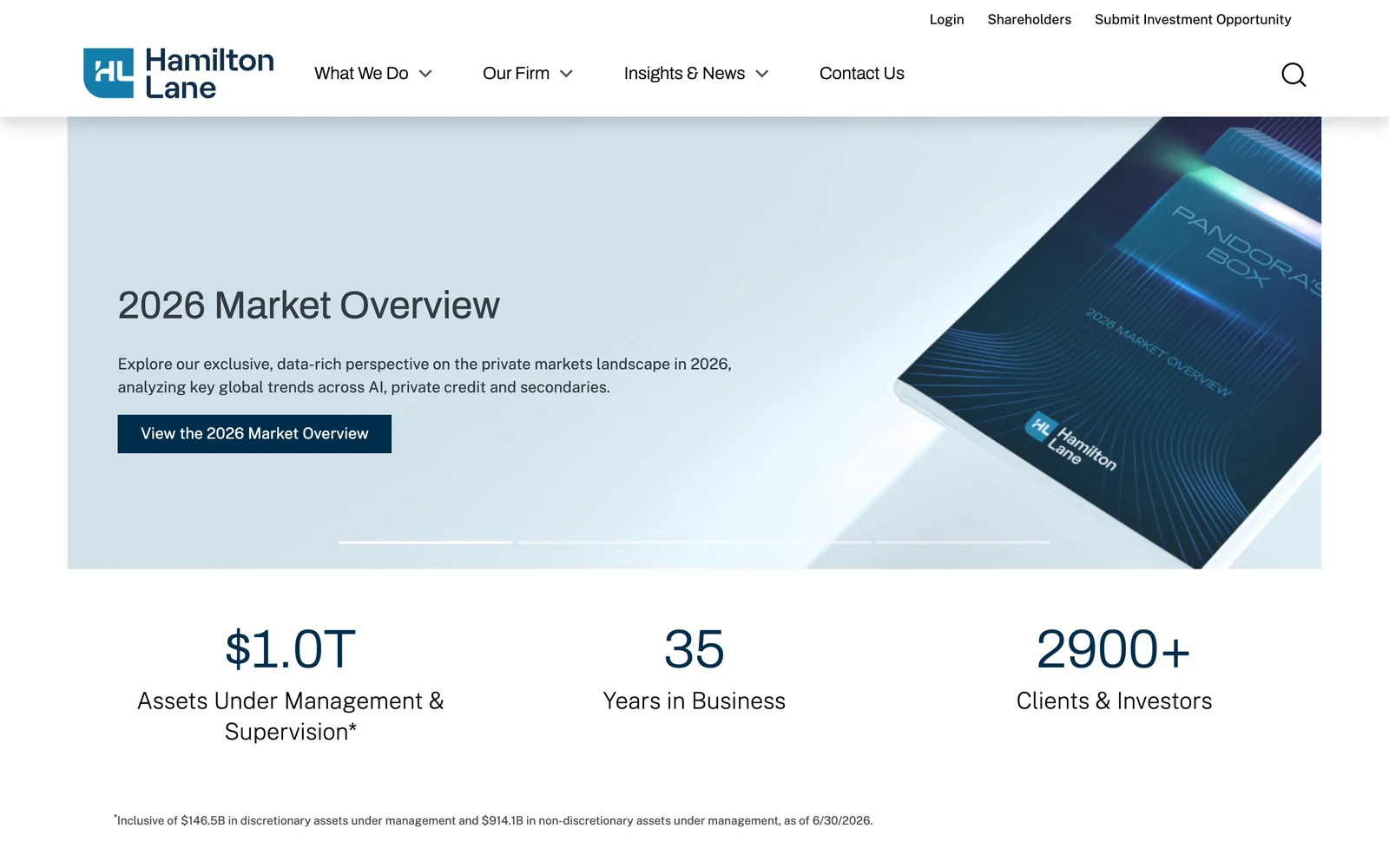
Hamilton Lane | Private markets investment manager | Keeps an open-door policy for meeting new funds in market each year |
EIF lists its open calls on its equity products page. The EUR 2.9 billion at KfW Capital is cumulative to the end of 2025, from its press release of 26 February 2026.
Hamilton Lane's figures come from its interview on emerging managers.
Who can invest in fund of funds venture capital, and what is the minimum?
Under US law, who may hold an interest in a fund of funds depends on the exemption it relies on. EU and UK vehicles sit under other regimes, set by counsel. The minimum commitment is a term of each vehicle's own documents, so ask the manager.
3 columns. Drag the table sideways; the first column stays put.
Route | Threshold | Law |
|---|---|---|
Section 3(c)(1) fund | No more than 100 holders; 250 for a qualifying venture capital fund, one with $12 million or less in aggregate capital contributions and uncalled commitments (the statute's $10 million, indexed under Rule 3c-7) | 15 U.S.C. 80a-3; 17 CFR 270.3c-7 |
Section 3(c)(7) fund | Held only by qualified purchasers | 15 U.S.C. 80a-3 |
Qualified purchaser | An individual with $5 million or more in investments; a person investing $25 million or more on a discretionary basis; a family-owned company, $5 million in investments | 15 U.S.C. 80a-2 |
Accredited investor | One test: net worth, alone or with a spouse or spousal equivalent, above $1 million, primary residence excluded; an income test and other routes also qualify | 17 CFR 230.501 |
ERISA plan assets | A fund's assets count as plan assets once benefit plan investors hold 25% or more of any class of its equity | 29 CFR 2510.3-101 |
The first row is where a fund of funds bites. Under section 3(c)(1), a company that owns 10% or more of a fund's voting securities, and is itself an investment company or would be but for section 3(c)(1) or 3(c)(7), counts as all of its own holders, a look-through that uses up the cap with the fund of funds' own investors.
Counsel's read therefore sets how large a ticket can be before anyone agrees a number. The terms of the limited partnership agreement have to match whichever exemption the vehicle relies on.
Fund of funds vs direct investing: where the second fee layer pays
A fund of funds and a direct commitment can reach the same underlying funds. What differs is who does the picking, how many sets of documents the LP signs and what the extra fee layer buys.
3 columns. Drag the table sideways; the first column stays put.
Through a fund of funds | Directly | |
|---|---|---|
Who picks the funds | The fund of funds' team | The LP's own team |
Fees | The fund of funds' fee and expenses, plus those of each underlying fund | The fees of each fund |
Documents | One set with the fund of funds | One set per fund |
Evidence | Venture: on a par with direct after fees. Buyout: behind (NBER, 2017) | The comparison point |
A May 2017 NBER working paper by Harris, Jenkinson, Kaplan and Stucke, using Burgiss data, found that after fees funds of funds returned as much as public market indices or more in buyout and in venture.
In buyout, a private equity fund of funds underperformed direct fund investment, while the venture average was on a par with direct venture fund investing. The authors read that as venture funds of funds being able to identify and access superior funds, and buyout ones not.
That makes the second fee layer easier to defend in venture than in buyout, but a 2017 sample doesn't price any vehicle open today.
Hamilton Lane modelled a hypothetical separate account or fund of funds over 12 years, built on private equity cash flows, and found that its fees cut returns by about 2%, before performance fees and expenses, which would cut them further.
| Track | What | When |
|---|---|---|
| Commitments | 3 years | 0 to 3 year |
| Fee on committed capital | 4 years | 0 to 4 year |
| Fee steps down each year | years 4 to 12 | 4 to 12 year |
| Life of the vehicle | 12 years | 0 to 12 year |
What should a GP have ready for a VC fund of funds or an emerging manager fund of funds?
Each fund of funds sets its own route and its own definition of an emerging manager. The EIF states its route in one line:
"The EIF selects funding partners based on a standard process involving application and due diligence."
European Investment Fundequity products page
In its interview on emerging managers, Hamilton Lane defines the term like this:
"We define an emerging manager as a GP who is raising a first, second or third institutional fund in the original fund series."
Katie MooreHamilton Lane, 2023
Hamilton Lane says emerging managers are 35 to 40% of its new deal flow each year. That share covers all of its strategies, buyout and venture among them, not venture alone. For venture, it says emerging firms range from as little as $5 or $10 million in assets to up to $1 billion.
ILPA publishes a standard due diligence questionnaire that LPs send to GPs. A fund of funds is an LP too, so a GP that has already completed ILPA's questionnaire can answer when one asks for it. What a GP has ready:
The fund's number, size and strategy, set against the programme's own definition of a newer manager
A completed ILPA questionnaire
A data room that is open before the first meeting
Offering documents that match the draft agreement
Counsel's read on the holder count and the look-through
How spectup runs a GP's raise through fund of funds venture capital
spectup works for the GP, who signs the engagement letter and is the only client on the raise. A fund of funds is one place a target list can go, and it is an investor spectup brings to the table.
spectup represents GPs raising private funds of $50M or more in private equity, venture, private credit and real estate, and has advised, raised or placed $760M+.
The target list draws on three layers at once: 440+ direct investor and LP relationships from closed transactions, 2,500+ investors and LPs spectup has sat in front of with clients, and 30+ partner firms, among them advisors, banks and funds, whose own investors open on a shared transaction.
A raise that leans on one fund of funds hangs on a single LP's decision, so the list is built wider than that.
Timing comes from a signal engine spectup built itself, which watches for the moment capital becomes allocatable, such as a fund closing, and from proprietary data on what each investor is currently allocating to.
spectup prepares the offering materials (the memorandum, the investor deck, the financial model, the term sheet and the data room), manages Q and A and prepares the meetings.
spectup prepares the GP for the term negotiation, and the GP and its counsel negotiate; spectup gives no legal advice and is not a law firm. Where the vehicle still has to be set up, spectup's partner law firm does the legal work of fund formation.
The GP is also the only one who pays. The fee is a retainer each month while the placement is live, then one placement fee at the close, once the capital is in.
How does a GP approach a VC fund of funds?
List who is active in fund of funds venture capital for your strategy and region: the public programmes above, the private funds of funds and the LPs the GP already knows.
Read each one's published route on its own page, and mark the funds that publish none. Funds that publish no route are reached through relationships, which is the work a private placement agent takes on.
Ask where each is in its commitment period. In Hamilton Lane's hypothetical, commitments run across the first three years of a 12-year life, the fee is charged on committed capital for the first four years and then steps down each year, and a real vehicle sets its own period.
Send the questionnaire, the data room and the private placement memorandum together, with counsel's look-through read, and meet. The GP and its counsel negotiate terms with the fund of funds.
Three conclusions
EIF takes applications under a standard process and Hamilton Lane keeps an open door for new funds in market, so the first step is each body's own page.
A company holding 10% or more of a 3(c)(1) fund's voting securities counts as all of its own holders. Counsel's answer comes before anyone agrees a ticket size.
In venture the NBER paper found funds of funds on a par with direct investing after fees, in buyout behind it, so the layer has to buy something an LP cannot get alone.
Fund of funds venture capital: questions readers ask
7 questions on fund placement and GP capital, answered by Edwin Mik, Partner & Head of IR.
01What is a fund of funds in venture capital?
A fund that commits LP capital mainly to other venture funds, and in some cases to companies beside a GP. Its LPs reach several managers through one commitment.
02What are the fees associated with funds of funds?
Two sets. LPs bear the fund of funds' own fees and expenses and, indirectly, those of each underlying fund, as the SEC's investor education site puts it. In Hamilton Lane's 12-year hypothetical, built on private equity cash flows, fees cut returns by about 2%, before performance fees and expenses. Terms differ by vehicle, so each vehicle's documents set the rate.
03What are the risks of investing in funds of funds?
The measured one is the second fee layer. A 2017 NBER study found a private equity fund of funds behind direct fund investment after fees in buyout, while venture funds of funds were on a par with it. Distributions also pass through two waterfalls, the underlying fund's and then the fund of funds' own.
04Who can invest in a fund of funds, and what is the minimum?
Under US law, it depends on the exemption the fund uses. A section 3(c)(1) fund is held by no more than 100 persons, or 250 for a qualifying venture capital fund, which has $12 million or less in contributions and uncalled commitments, so a $50M fund is on the 100-holder cap. A section 3(c)(7) fund is held only by qualified purchasers, with $5 million or more in investments as individuals. EU and UK vehicles sit under other regimes, set by counsel. No statute sets a minimum commitment; the vehicle's documents do.
05What is the difference between a fund of funds and a venture capital fund?
A venture capital fund holds stakes in companies. A venture capital fund of funds holds stakes in funds, so the LP's exposure to a company is one step further away.
06Do funds of funds back emerging managers?
Some do, and an emerging manager fund of funds, or a sleeve inside a larger one, exists for them. The EIF says it has invested in first-time teams as well as in proven teams closing bigger funds, and Hamilton Lane says emerging managers are 35 to 40% of its new deal flow annually. Each programme defines the term itself. Hamilton Lane's is a GP raising a first, second or third institutional fund in the series, so check the definition against your own fund.
07Is a private placement agent worth it for a GP raising from funds of funds?
It can be, since a fund of funds is one LP group among several and the agent's work covers all of them: a target list, the offering materials, meeting preparation and Q and A management. A private placement agent signs an engagement letter with the GP only. spectup is paid by the GP, through a monthly retainer while the placement runs and one placement fee at the close, once the capital is in. A GP applying to a public programme such as EIF's uses the programme's own route.
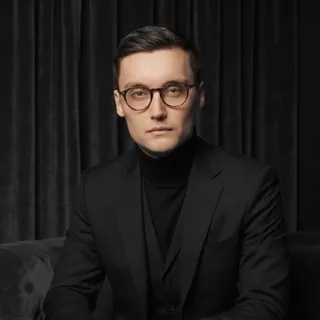
Edwin Mik
Partner & Head of IR
Formerly at Barclays, Apax Partners and Euronext, Edwin knows how investors screen a raise. He works out who is allocating now, which of the 440+ relationships is the right first call, and what they need to see.
LinkedIn


